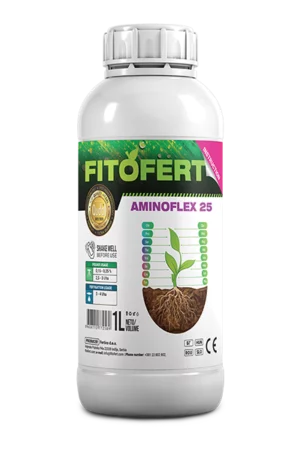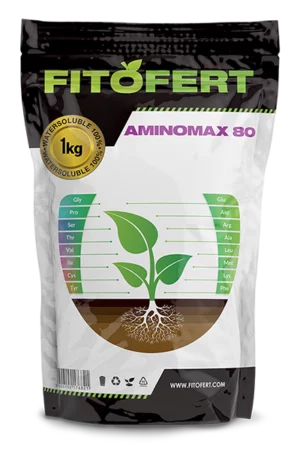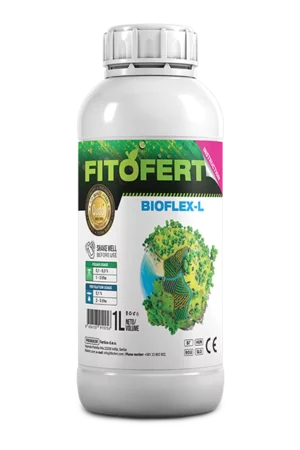


Biostimulating fertilizers
Biostimulators are a powerful tool for improving crop productivity and vitality. Their application has multiple effects – it accelerates metabolism and photosynthetic activity, stimulates the synthesis of chlorophyll and phytohormones, but also balances their relationship in the key phenophases of development. In this way, the plants are provided with stable growth, better yield and better efficiency in the use of resources .
In addition to the direct influence on growth and development, biostimulators play an important role in the development of mechanisms of plant resistance and resistance to abiotic (frost, drought, temperature shocks) and biotic stress factors. The root system becomes stronger and more functional, which enables better absorption of nutrients and greater salt tolerance.
When applied by fertigation, biostimulators act not only on the plant but also on the soil. Compounds derived from algae – polysaccharides, amino acids and natural bioregulators – are food and signaling substances for beneficial microorganisms. Their presence encourages an increase in the number and activity of the microbiological community in the rhizosphere, which leads to a better decomposition of organic matter and the creation of stable forms of nutrients available to plants.
In this way , biological diversity, efficiency of microorganisms and soil structure are simultaneously improved, which is the foundation for preserving fertility and long-term sustainable production.